Lisa Wiese
Human-Centered AI · Digital Wellbeing · Applied HCI Research
I am a researcher-practitioner with a PhD in Human-Computer Interaction and an MSc in Psychology. My work sits at the intersection of human-AI interaction, digital wellbeing, and applied product research. I study how digital systems shape people over time, and I help teams turn complex questions about users, trust, behavior, and emerging technology into clear research directions, practical design guidance, and better decisions.
- PhD in Human-Computer Interaction, Delft University of Technology · MSc in Psychology
- 17+ years across academic, applied, and industry research
- Current work on AI-supported products in high-stakes and regulated contexts
- Expertise in human-centered AI, mixed-methods research, digital health, and responsible technology design
Open to applied research, teaching, and research-led roles in human-centered AI, digital health, and responsible technology.
AI product design in digital mental health
Industry Research
Designing AI products in a regulated, high-stakes context. Leading UX research for an AI-powered mental health product: co-design with users and clinicians, translating CBT principles into AI interaction flows, and studying how people perceive and use AI for mental health support. Navigating clinical appropriateness, responsible AI, and regulatory compliance.
Platform-scale UX analysis
International Journal of Design
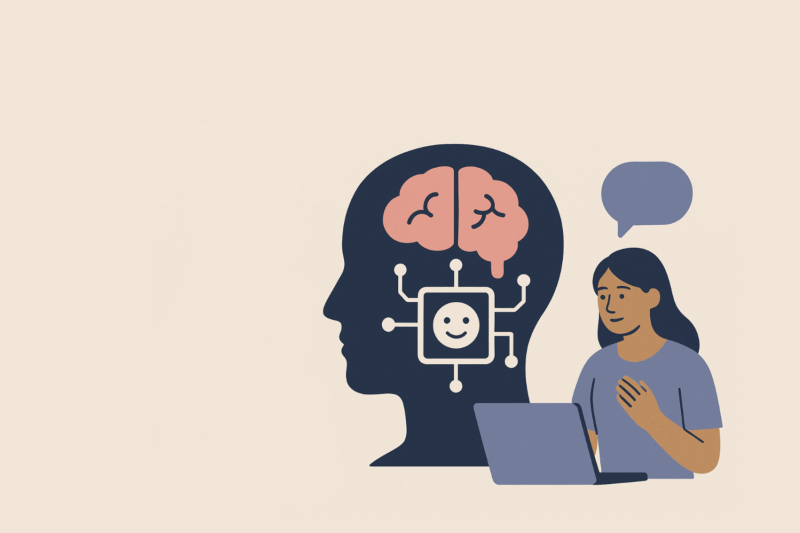
Large-scale platform analysis and feature-level UX audit. Expert analysis of 165 features across six major platforms (Facebook, Instagram, Pinterest, LinkedIn, YouTube, Spotify), mapping how design choices shape user wellbeing. Identified patterns that foster positive behaviors and opportunities for more intentional feature design.
User behavior research on Instagram
International Journal of Design
An online study investigating how people use Instagram to engage in positive activities. Uncovered patterns in self-reflection, social exchange, and emotion regulation. Challenged assumptions about "passive" browsing—showing it can be cognitively and emotionally engaging when the context supports meaningful use.

Framework application case study
Design Research Society (DRS'24)
A case study documenting how the framework translates into practice. Observed Interaction Design students applying the framework to redesign consumer technology features. Identified three integration opportunities, documented the design mechanisms used, and mapped challenges teams face when applying research-based guidance.

Designing for sustained wellbeing
Multimodal Technologies and Interaction (MDTI)
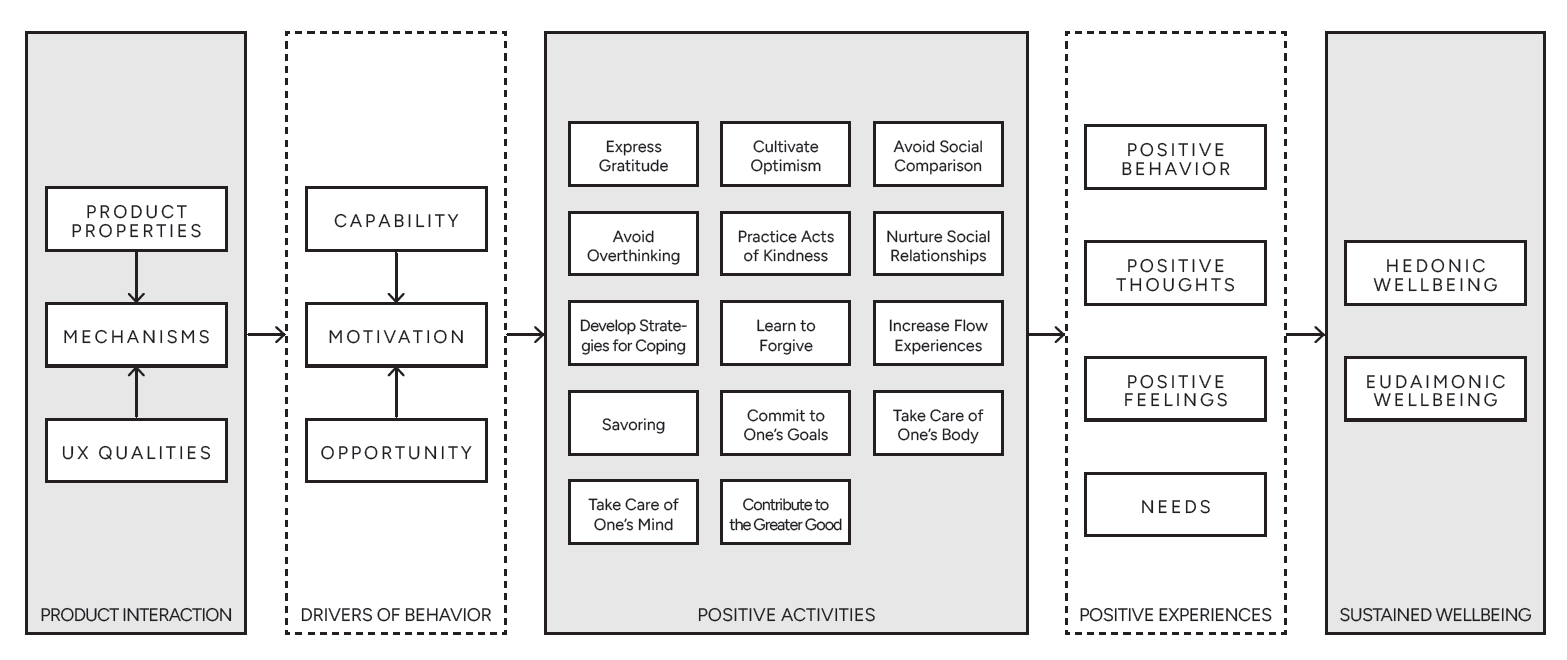
Translated academic research into actionable design guidance. This multi-stage framework synthesizes findings from HCI, behavioral science, and positive psychology into a practical model for product teams. It provides clear guidance for designing technologies that support wellbeing, along with meaningful approaches for measuring impact.
Positive activities toolkit
Design Tool
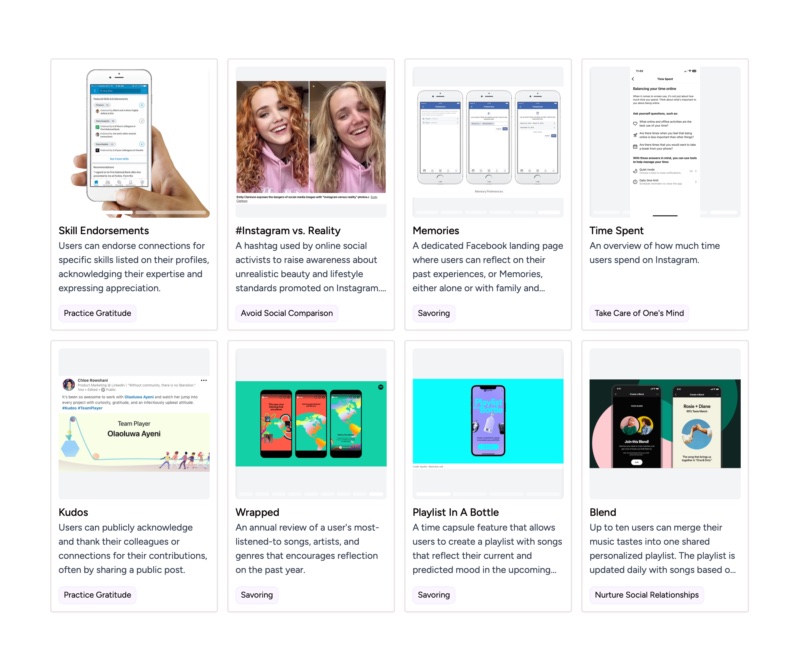
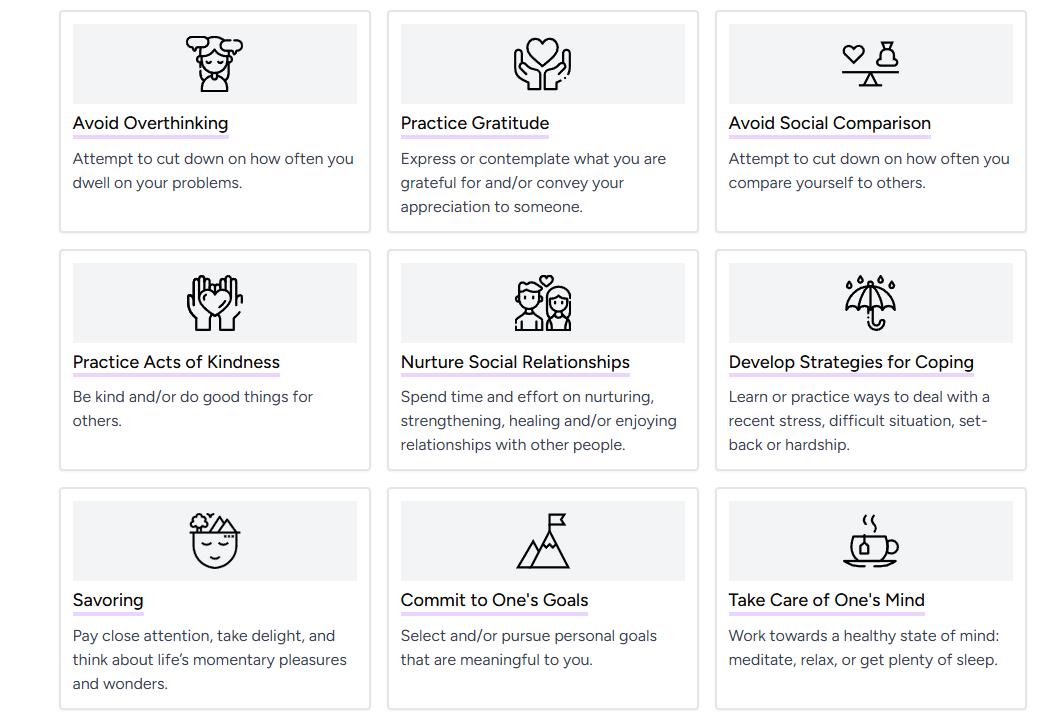
Created practical tools for design teams. Developed a taxonomy of positive activities from literature review and empirical research, then translated it into usable resources: a cheatsheet and an online database with concrete technology examples. Demonstrates how academic research can become hands-on tools for product development.
Pathways to sustained wellbeing
Designing Interactive Systems (DIS)
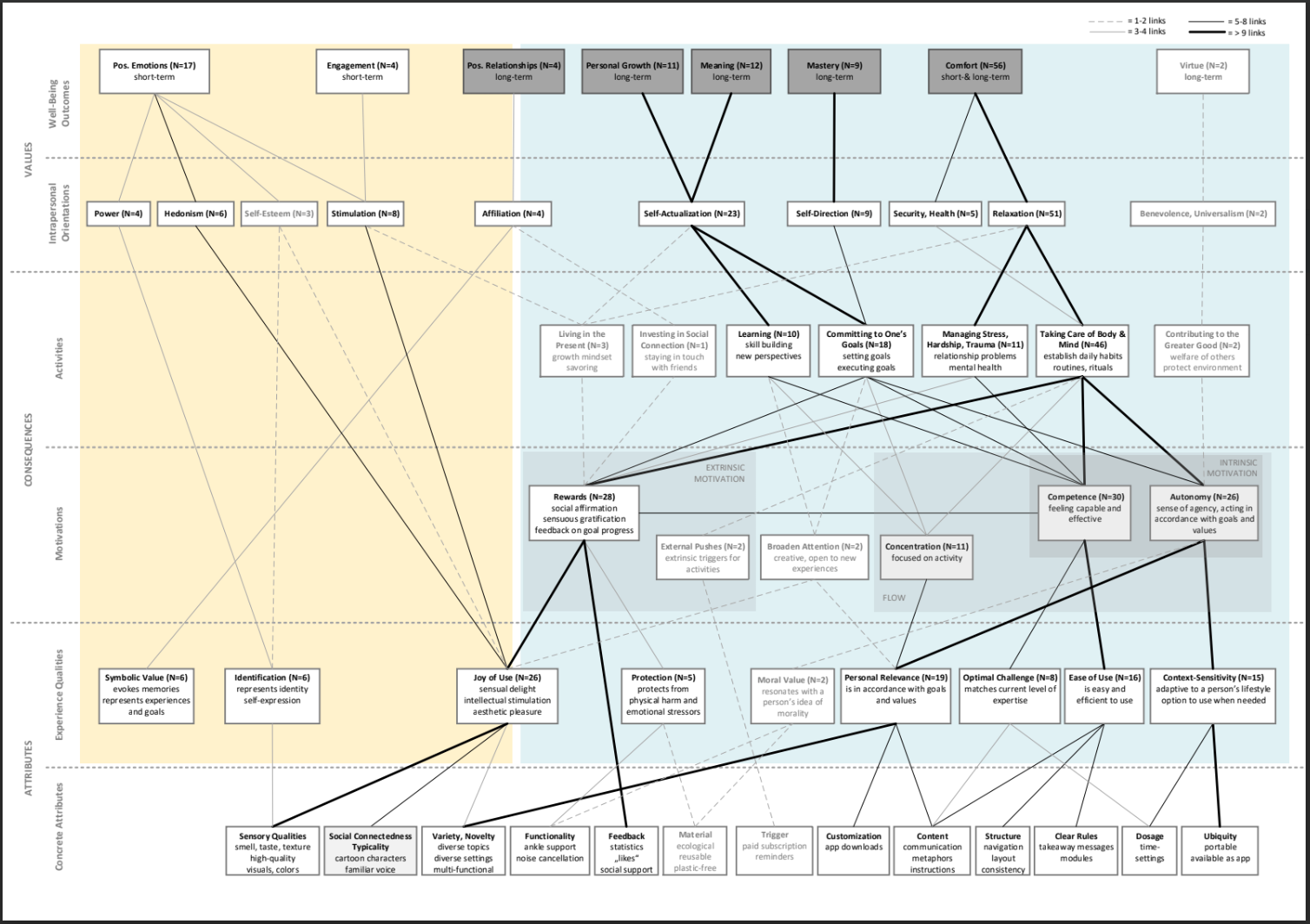
This study explored how everyday physical and digital products can support lasting wellbeing. Using laddering interviews, the research mapped how small product interactions connect to broader wellbeing outcomes. The findings show that products often promote wellbeing indirectly, by supporting positive activities such as staying socially connected, reflecting on experiences, or working toward personal goals. These insights highlight practical opportunities for designing technologies that help people flourish.